
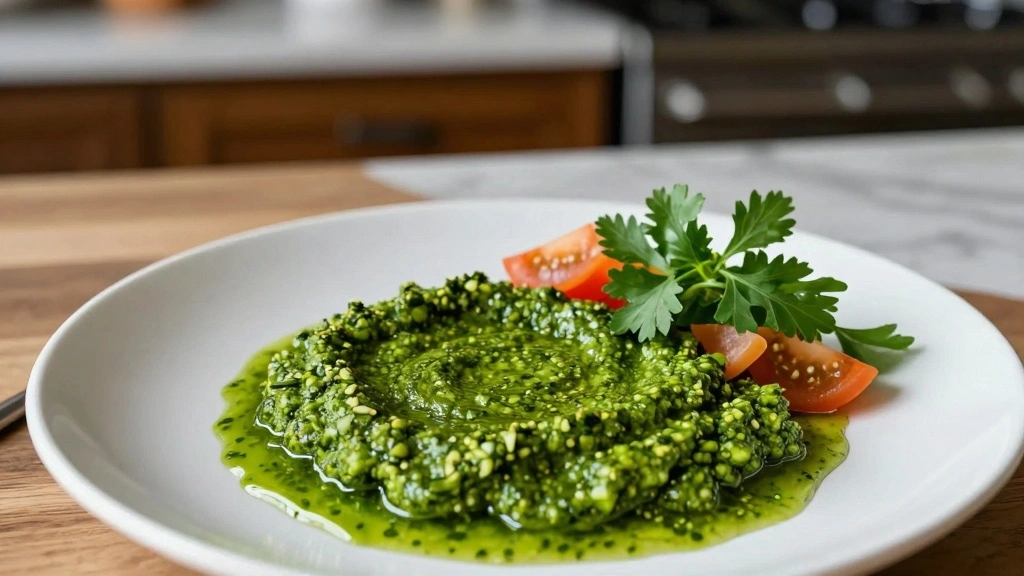
This vibrant Dairy Free Pesto celebrates the fresh, zesty flavors of basil, garlic, and nuts without the need for traditional cheese.
With its rich green color and robust aroma, this pesto is a versatile addition to your culinary repertoire.
I first discovered the joy of dairy-free pesto during a summer trip to Italy, where the local markets brimmed with fresh basil.
Its appeal lies in its ability to transform simple dishes into gourmet delights with minimal effort.
Whether tossed with pasta, spread on sandwiches, or used as a dip, this pesto is sure to impress.
Embrace the seasonal abundance of fresh herbs and enjoy a flavorful journey with every bite.
Contents
- The History and Cultural Significance
- Recipe Overview
- Nutritional Information (per serving)
- Essential Equipment Guide
- Ingredients
- Preparation Methods
- Step 1: Prepare Ingredients
- Step 2: Blend Basil and Garlic
- Step 3: Add Pine Nuts
- Step 4: Incorporate Nutritional Yeast
- Step 5: Stream in Olive Oil
- Step 6: Add Lemon Juice and Season
- Step 7: Final Blend and Check Consistency
- Step 8: Store or Serve
- Critical Timing and Temperature Guide
- Pro Tips for Fresh Dairy Free
- Troubleshooting Common Issues
- Variations and Regional Differences
- Food Science Behind the Recipe
- Frequently Asked Questions
- Serving and Presentation Guide
Recommended Products
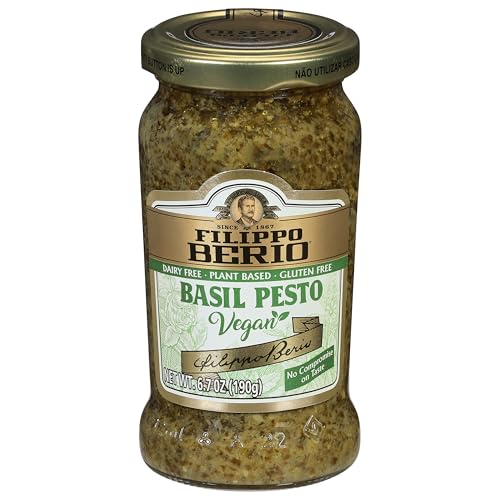
VEGAN BASIL PESTO: Produced in Liguria, Italy, the original home of pesto, our dedication to authentic recipes sets these flavors apart and would make our illustrious founder proud

DAIRY FREE – Enjoy the creamy richness of basil pesto with zero dairy. Made with cashews and sunflower oil for a naturally smooth, satisfying texture.

Vegan Italian Pesto: Made without cheese or dairy, yet packed with authentic basil flavor and rich, creamy texture.
The History and Cultural Significance
• Pesto traces its origins to Genoa, Italy, where it was initially crafted by local Ligurian people using basil, pine nuts, olive oil, garlic, and cheese.
• The dish evolved over decades as different regions adapted the ingredients according to local produce, creating variations like the almond-rich Sicilian pesto.
• In Italy, this dish traditionally appears at family gatherings and festive occasions, symbolizing abundance and familial love.
• While many variations exist across different regions, the authentic version maintains a fresh, raw blend of ingredients that sets it apart from imitations.
Recommended Products

TRADITIONALLY MADE - We use a classic Italian recipe for Pesto alla Genovese
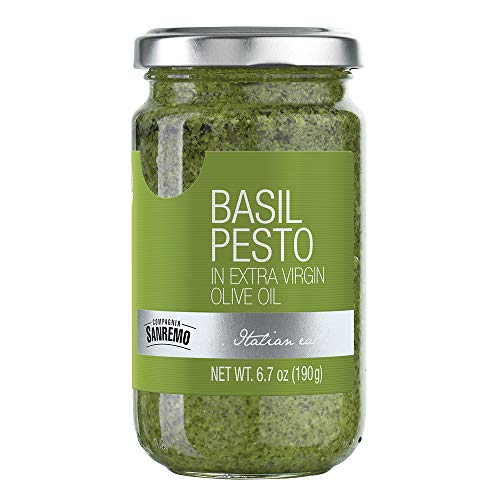
Basil Pesto is made with Genovese basil D.O.P. Intensely fragrant

6.5 oz traditional basil pesto sauce
Recipe Overview
Recommended Products

BRAGG NUTRITIONAL YEAST SEASONING: A delicious, cheesy-flavored seasoning that adds a savory, nutritional boost to everyday meals, complete with a convenient shaker top for easy sprinkling
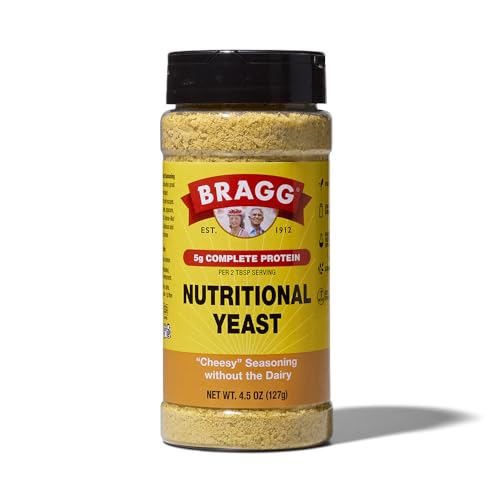
Serving Size - 2 tablespoon

Premium Nutritional Yeast Flakes - Fortified
Nutritional Information (per serving)
Recommended Products

SUPERIOR FUNCTION: The Cuisinart Mini-Prep Plus Food Processor offers an efficient 250-watt motor and patented reversible stainless steel blade to quickly chop herbs, dice vegetables, and grind hard cheese


Brought to you by Whole Foods Market. When it comes to innovative flavors and products sourced from artisans and producers around the world, the Whole Foods Market brand has you covered. Amazing products, exceptional ingredients, no compromises.
Essential Equipment Guide
Food Processor: A food processor is crucial for creating a smooth and consistent pesto texture. While a mortar and pestle can be used for a more rustic texture, a food processor provides speed and efficiency. Look for a model with a strong motor and sharp blades for the best results.
Microplane Grater: If you prefer to add a touch of nutritional yeast or zest for extra flavor, a microplane grater is ideal for achieving fine, even shavings. Alternatives include a fine box grater, but a microplane offers superior control and ease of use.
Rubber Spatula: A rubber spatula is essential for scraping down the sides of the food processor to ensure all ingredients are evenly incorporated. A silicone spatula can also work, but ensure it’s flexible enough to reach tight corners.
Recommended Products

Elevate Your Culinary Creations: Crafted from a traditional Italian recipe, Artisan Ingredients Basil Pesto by Mezzetta transforms ordinary dishes into flavorful masterpieces. The harmonious blend of fresh basil, extra virgin olive oil, and savory Parmesan cheese brings authentic Genovese flavor to your table. Enhances grilled pork or your favorite pasta, delighting your taste buds and impressing your guests

ARTISAN INGREDIENTS BASIL 2-PACK: Get (2) 6.25 oz jars, one each of Basil Pesto and Tomato Pesto

STACKABLE SPACE-SAVING DESIGN: Unique stackable shape helps maximize space in your refrigerator, pantry, or kitchen cabinet. The compact footprint keeps individual portions neatly organized without taking up unnecessary room.
Ingredients
Recommended Products

High Quality Natural Ingredients: Cold pressed Ligurian EVOO, Genovese DOP basil, and pine nuts; fresh vegan pesto sauce; authentic Italian flavor for pasta or vegetables

Pesto is a signature Italian sauce that's ideal as a staple ingredient in every pantry.

For the Pesto
|
| Amount | Ingredient | Notes |
|---|---|---|
| 2 cups | fresh basil leaves | packed tightly, the star of the dish |
| 1/2 cup | pine nuts | toasted for enhanced flavor |
| 2 cloves | garlic | peeled and minced |
| 1/2 cup | extra-virgin olive oil | adds richness and smooth texture |
| 1/4 cup | nutritional yeast | substitute for cheese, adds umami |
| 1 tablespoon | lemon juice | freshly squeezed, adds brightness |
| 1/2 teaspoon | salt | enhances all flavors |
| 1/4 teaspoon | black pepper | freshly ground, for a subtle kick |
Preparation Methods
Toasting Nuts: Toasting pine nuts is a simple technique that amplifies their natural oils and flavor. Spread nuts in a single layer on a dry skillet over medium heat, stirring frequently to prevent burning. Cook until golden and fragrant, then cool before use.
Packing Fresh Herbs: For vibrant pesto, tightly pack fresh basil leaves in a measuring cup. This ensures you use enough basil to achieve a robust flavor. Use the back of a spoon to press leaves down gently.
Emulsifying: Emulsifying combines oil with other liquids into a cohesive mixture. Slowly streaming olive oil into the food processor while blending helps achieve a creamy, homogeneous pesto. This technique ensures the oil doesn’t separate.
Recommended Products

Authentic Italian Pesto – Made with certified Genovese Basil DOP (PDO) from Liguria, Italy.
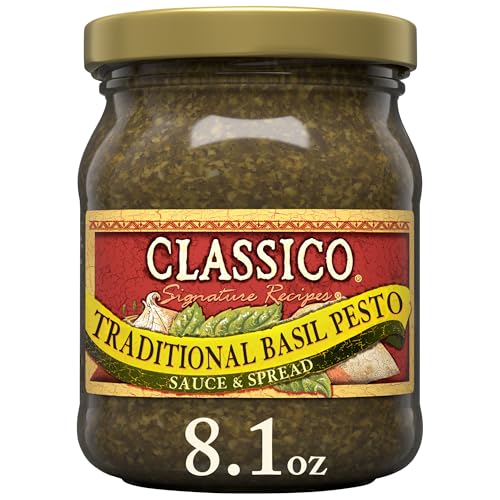
CLASSICO PESTO SAUCE: One 8.1 oz jar of Classico Signature Recipes Traditional Basil Pesto Sauce and Spread

PDO GENOVESE BASIL – Made with certified Basilico Genovese PDO (30%), prized for its vibrant green color and intensely aromatic basil flavor that defines authentic Genovese pesto.
Step 1: Prepare Ingredients
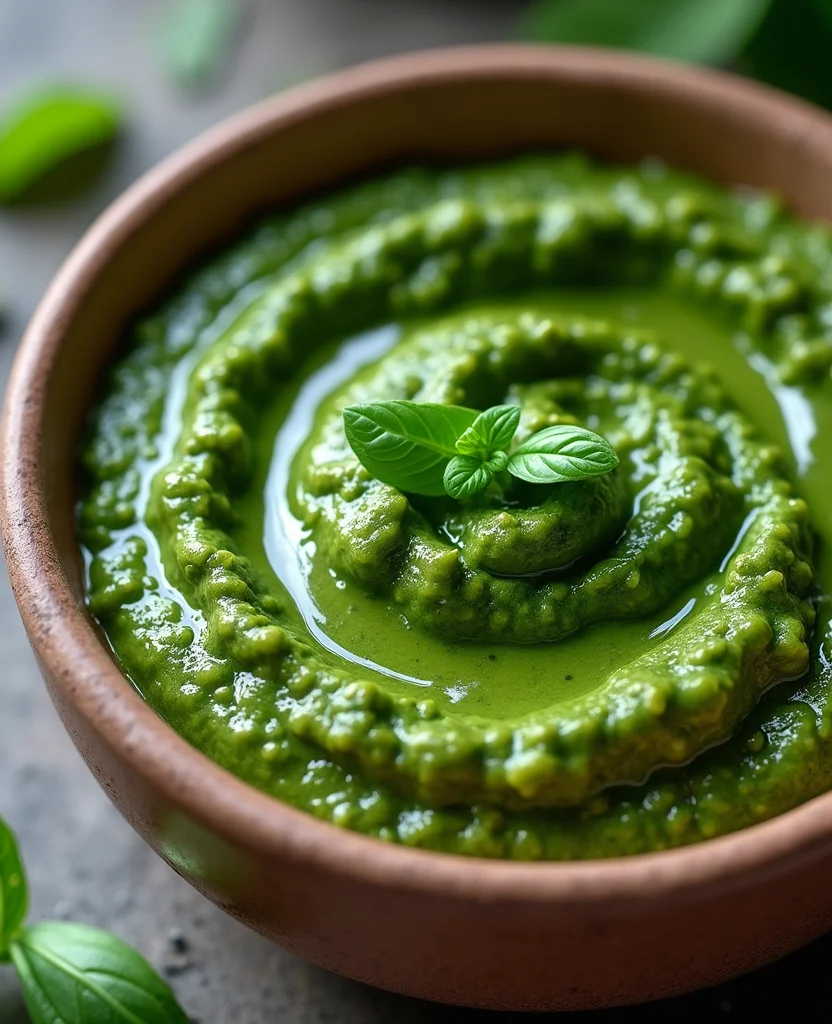
Gather all ingredients and equipment.
Measure and pack the basil leaves into the measuring cup.
Toast the pine nuts until golden and fragrant.
Cool the nuts completely before proceeding.
Recommended Products
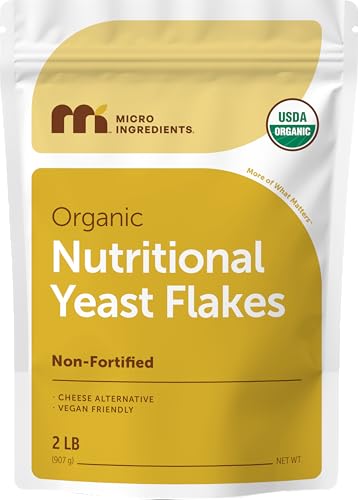
Micro Ingredients USDA organic certified nutritional yeast flakes. Non-fortified yeast that creates a cheesy flavored dairy free cheese replacement. Naturally contains complete plant based protein and is friendly with most diets.

Non-Fortified Nutritional Yeast Flakes - Product of USA

Step 2: Blend Basil and Garlic

Add the packed basil leaves and minced garlic to the food processor.
Pulse until the basil is coarsely chopped.
Scrape down the sides with a rubber spatula to ensure even chopping.
Continue pulsing until the mixture is well combined.
Recommended Products
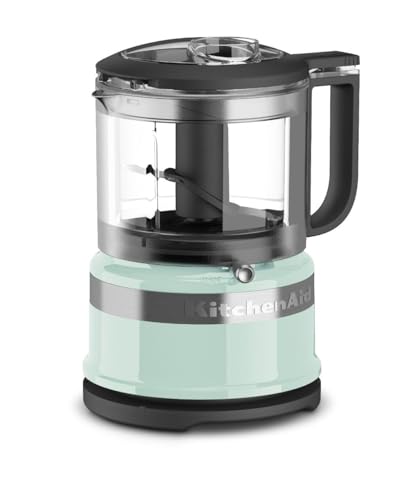
Convenient 3.5 cup work bowl features a locking blade, handle and pour spout for easy serving,and dishwasher-safe for quick clean up

Convenient 3.5 cup work bowl features a locking blade, handle and pour spout for easy serving, and dishwasher-safe for quick clean up

Convenient 3.5 cup work bowl features a locking blade, handle and pour spout for easy serving,and dishwasher-safe for quick clean up
Step 3: Add Pine Nuts
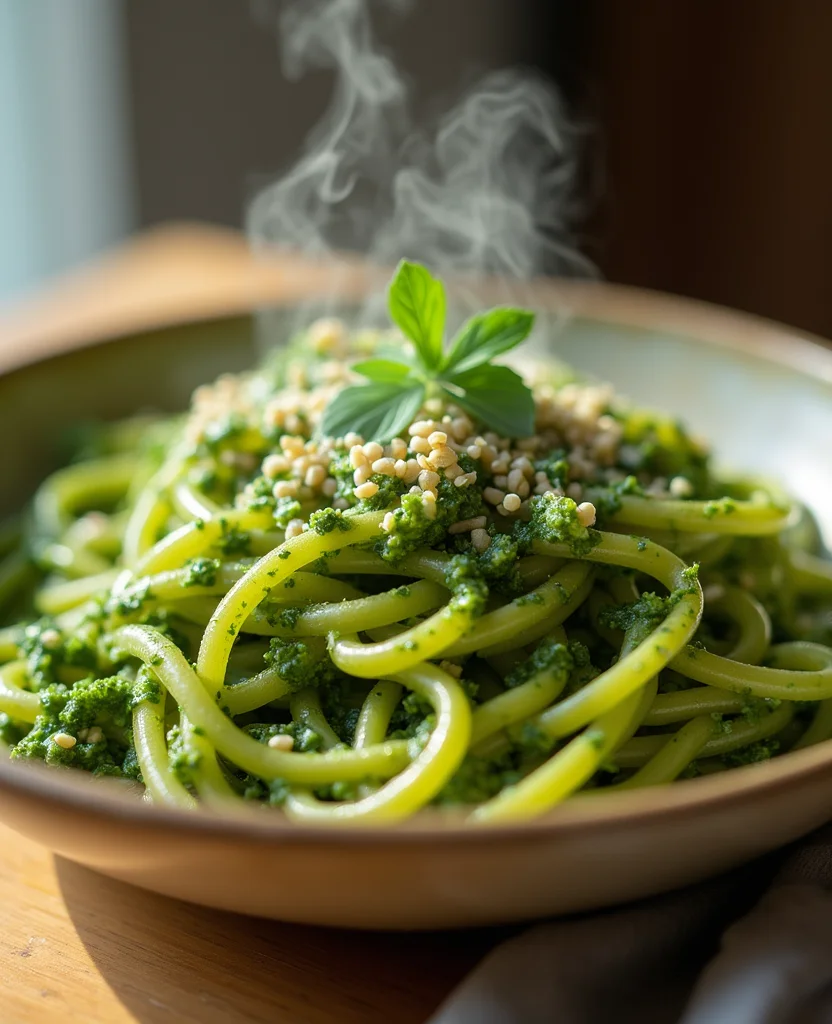
Add the cooled, toasted pine nuts to the basil and garlic mixture.
Pulse until the nuts are finely chopped and well blended.
Scrape down the sides again to incorporate all ingredients.
Ensure the mixture has a uniform consistency before proceeding.
Recommended Products

Organic Italian Pesto: Made in Italy using organic sun-dried tomatoes, aged cheese, and extra virgin olive oil for a savory flavor.

STACKABLE SPACE-SAVING DESIGN: Unique stackable shape helps maximize space in your refrigerator, pantry, or kitchen cabinet. The compact footprint keeps individual portions neatly organized without taking up unnecessary room.

Elevate Your Culinary Creations: Crafted from a traditional Italian recipe, Artisan Ingredients Basil Pesto by Mezzetta transforms ordinary dishes into flavorful masterpieces. The harmonious blend of fresh basil, extra virgin olive oil, and savory Parmesan cheese brings authentic Genovese flavor to your table. Adds a gourmet touch to grilled pork or enhances your favorite pasta, delighting your taste buds and impressing your guests
Step 4: Incorporate Nutritional Yeast
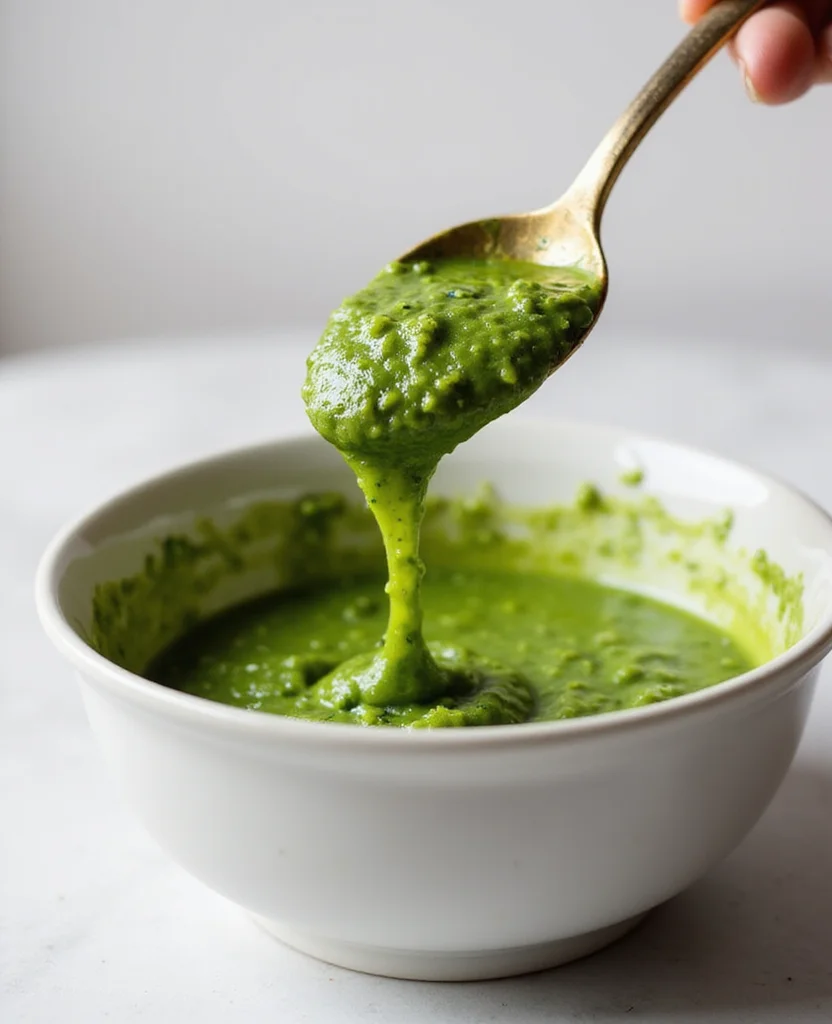
Add nutritional yeast to the processor for a cheesy, umami flavor.
Pulse a few times to mix it with the basil and nuts.
Check for even distribution throughout the mixture.
Adjust seasoning if necessary after taste testing.
Step 5: Stream in Olive Oil
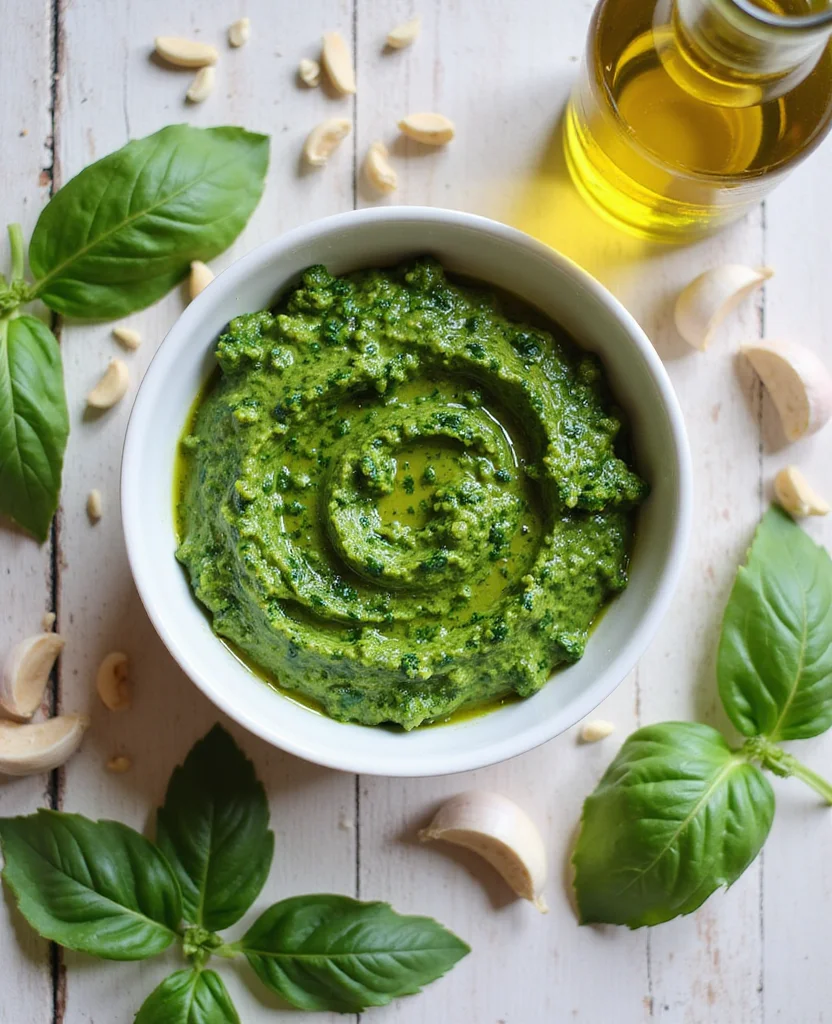
With the processor running, slowly stream in the olive oil.
Continue blending until the mixture is smooth and emulsified.
Stop to scrape down the sides and blend again if needed.
The pesto should have a creamy, thick consistency.
Step 6: Add Lemon Juice and Season
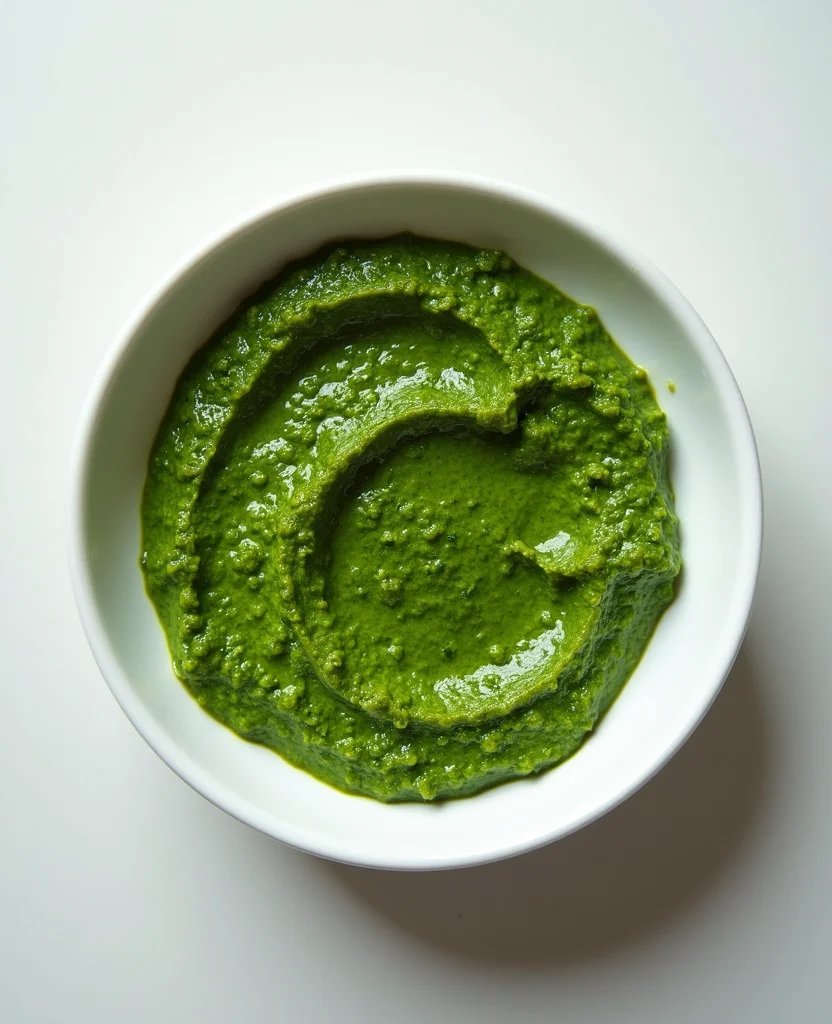
Add fresh lemon juice, salt, and pepper to the pesto.
Pulse briefly to combine and adjust seasoning to taste.
Lemon juice adds brightness, while salt and pepper enhance flavors.
Taste test and make final adjustments if necessary.
Step 7: Final Blend and Check Consistency
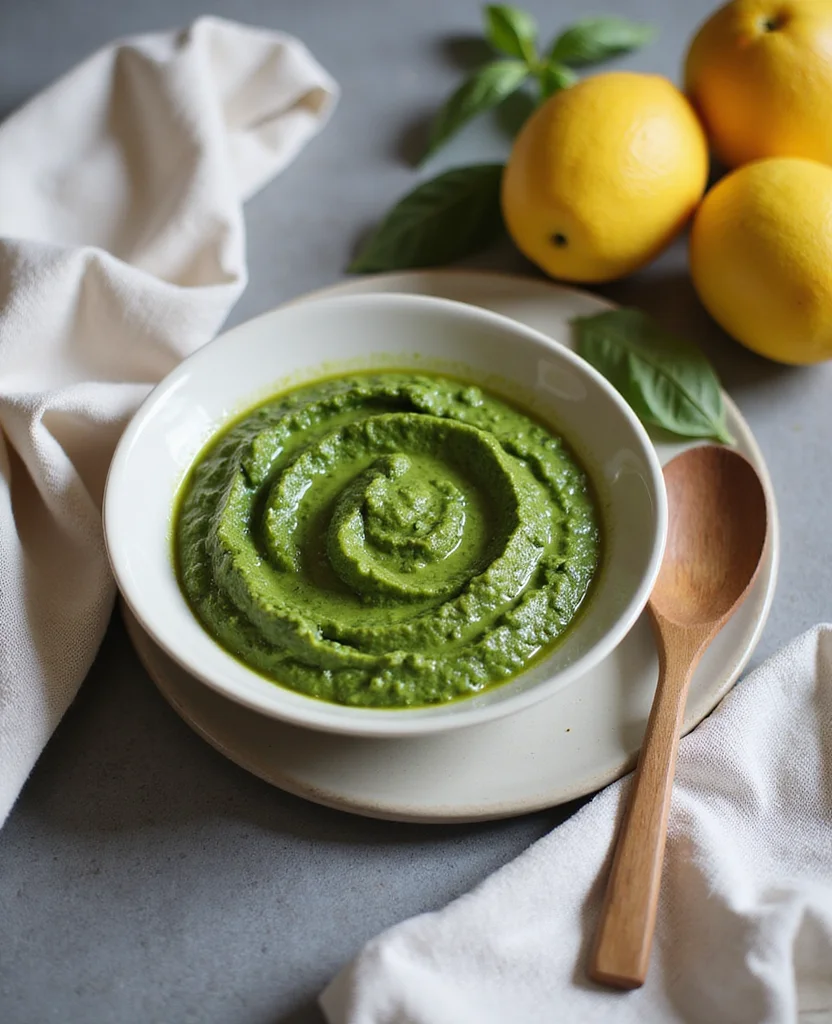
Give the pesto a final blend to ensure all ingredients are incorporated.
Check the consistency; it should be smooth but with some texture.
Adjust with more oil or lemon juice if too thick.
The pesto should be vibrant green and aromatic.
Step 8: Store or Serve
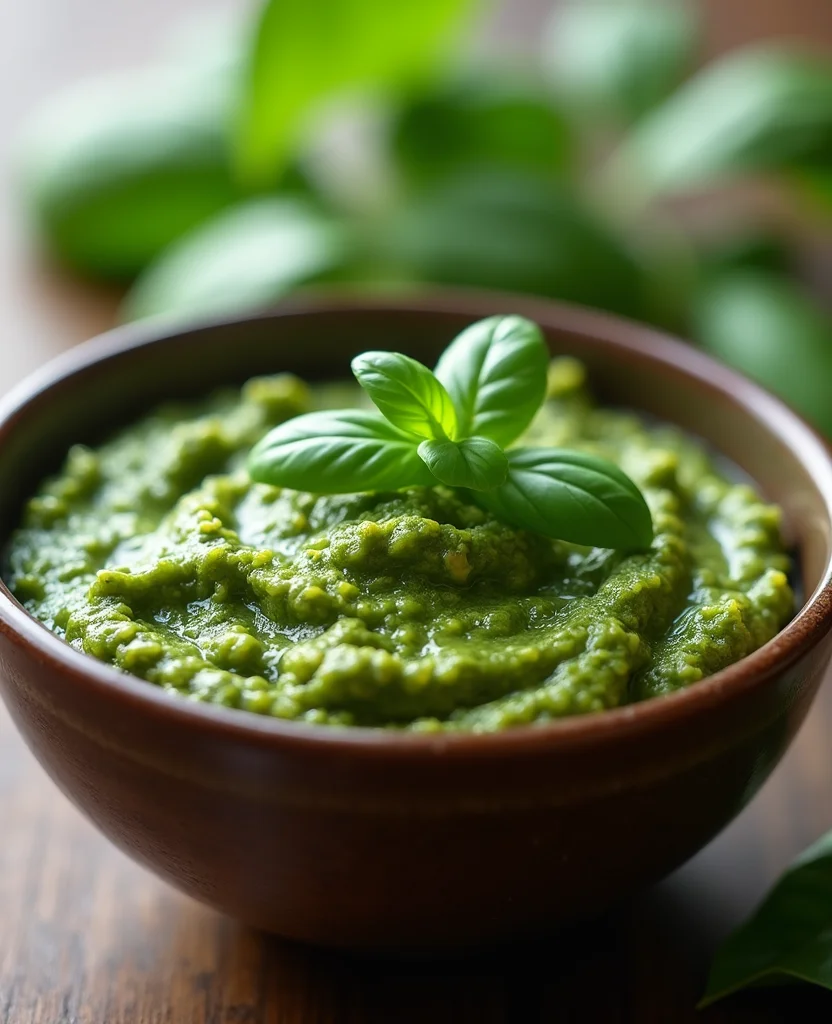
Transfer the pesto to a clean jar or container.
Use immediately or store in the refrigerator for up to a week.
If storing, cover the surface with a thin layer of olive oil to preserve freshness.
Serve with pasta, on bread, or as a dip.
Critical Timing and Temperature Guide
Toasting Nuts: Toast pine nuts over medium heat for 3-5 minutes. Look for a golden color and nutty aroma. Avoid high heat, which can cause burning.
Blending Pesto: Blend ingredients for about 1-2 minutes, stopping to scrape sides. Over-blending can heat the mixture and cause discoloration.
Storing Pesto: Store pesto in the refrigerator at 40°F or below. Use within a week for optimal freshness. Watch for oil separation, which can indicate spoilage.
Pro Tips for Fresh Dairy Free
• Ingredient Selection: Choose fresh, vibrant basil and high-quality extra-virgin olive oil for the best flavor. These are the backbone of your pesto.
• Preparation Secret: Toasting the pine nuts intensifies their flavor, a step often skipped but crucial for depth.
• Temperature Management: Keep all ingredients cool to prevent the basil from wilting and losing its color during blending.
• Texture Enhancement: Add olive oil slowly to achieve a creamy, emulsified texture without over-processing.
• Flavor Layering: Incorporate nutritional yeast and lemon juice to build complex flavors that mimic traditional pesto.
• Make-Ahead Strategies: Prepare pesto in advance and freeze it in ice cube trays for easy portioning and long-term storage.
• Restaurant-Quality Finishing Touches: Top finished dishes with a drizzle of high-quality olive oil and a sprinkle of crushed pine nuts for visual appeal.
• Equipment Optimization: Use a rubber spatula to scrape down the food processor and ensure even blending.
Troubleshooting Common Issues
• Texture Too Thick: This often results from insufficient olive oil. Gradually add more oil while blending until desired consistency is reached.
• Flavors Unbalanced: If the pesto tastes flat, add a pinch more salt or lemon juice to brighten it.
• Bitter Taste: Over-blending can cause basil to become bitter. Blend just until smooth, and avoid high-speed settings.
• Discoloration: Exposure to air causes browning. Store pesto with a layer of olive oil on top to minimize oxidation.
• Oily Separation: Emulsify properly by adding oil in a slow stream, and ensure the mixture is well combined.
• Garlic Overpowering: Use smaller or fewer cloves if garlic flavor is too strong. Blanching the garlic can also mellow its intensity.
Variations and Regional Differences
• Genoese Style: The classic version includes Parmesan cheese and pecorino, which are omitted in this dairy-free rendition.
• Sicilian Pesto: Incorporates tomatoes and almonds for a sweeter, richer flavor profile. Adjust nuts and herbs accordingly.
• Vegan Pesto: Uses nutritional yeast as a cheese substitute, as in this recipe, to maintain a full-bodied umami flavor.
• Sun-Dried Tomato Pesto: Adds sun-dried tomatoes for a tangy twist, often with walnuts instead of pine nuts.
Food Science Behind the Recipe
• Emulsification: Combining oil with basil creates a stable emulsion, preventing separation and maintaining creamy texture.
• Enzyme Activity: Fresh basil contains enzymes that can cause browning. Acid from lemon juice helps inhibit this process.
• Flavor Compounds: Toasting nuts releases volatile oils, enhancing flavor through Maillard reactions.
Frequently Asked Questions
What's the most common mistake people make when preparing Dairy Free Pesto? Over-blending the pesto, which can cause it to heat up and lose its vibrant color.
Can I use other nuts instead of pine nuts? Yes, walnuts or almonds are excellent substitutes and offer a different flavor profile.
How do I store leftover pesto? Store in an airtight container with a layer of olive oil on top to prevent oxidation and refrigerate for up to a week.
Is it possible to freeze pesto? Absolutely, freeze in ice cube trays for easy portioning, then transfer to a freezer bag for up to 3 months.
What if I don't have a food processor? A blender or a mortar and pestle can be used; however, they may require more manual effort.
How can I make the pesto spicier? Add a pinch of red pepper flakes or a small piece of chili to the blend.
Can I use dried basil? Fresh basil is essential for authentic pesto flavor; dried basil will not provide the same taste or texture.
Serving and Presentation Guide
• Traditional Presentation: Serve tossed with pasta and garnished with a sprig of fresh basil and a drizzle of olive oil.
• Appetizer Spread: Serve as a dip with fresh vegetables or spread on crostini for a simple appetizer.
• Sandwich Layer: Use as a flavor-packed spread on sandwiches or wraps, paired with grilled vegetables or proteins.
• Salad Dressing: Thin with additional olive oil and lemon juice for a vibrant salad dressing.
Conclusion
Embrace the simplicity and flavor of this Fresh Dairy Free Pesto to elevate your meals.
With its vibrant color and rich taste, it's a delightful addition to any dish.
Experiment with different nuts and herbs to create your own signature variation.
Enjoy the taste of summer year-round with this easy and delicious recipe.